Pañcakośa and Astrology: Understanding the Five Sheaths in Vedic Wisdom
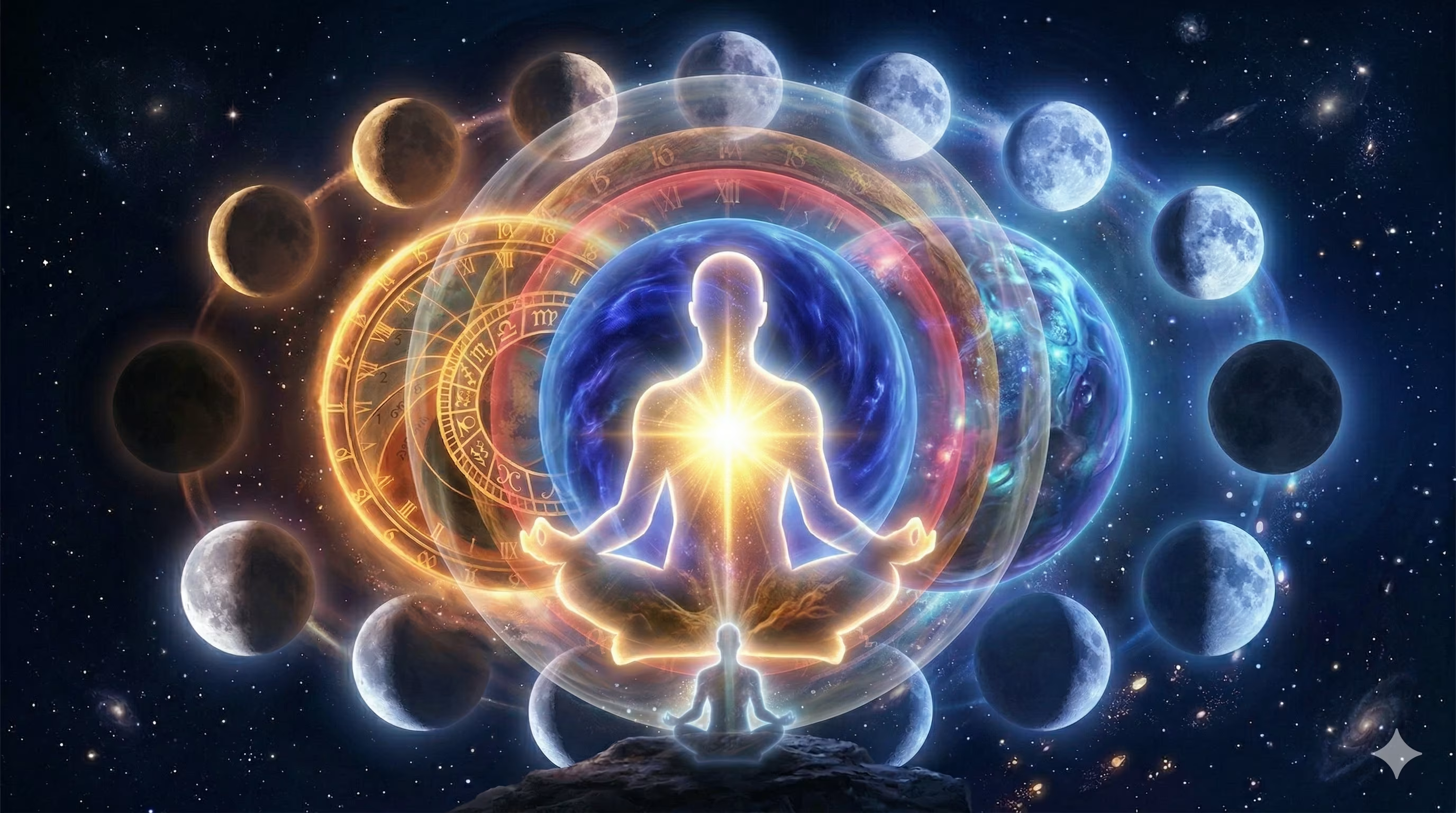
Pañcakośa and Astrology: Understanding the Five Sheaths in Vedic Wisdom
In the traditional Vedic worldview, the human being is far more than just a physical body or a thinking mind. The sages describe our existence as layered and multidimensional, expressed through the profound concept of the Pañcakośathe five sheaths that veil the innermost Self (Ātman). When this framework is understood alongside Jyotiṣa (Vedic astrology), it reveals a deeply integrated view of life, where cosmic movements (graha) mirror inner states of being.
The term Pañcakośa comes from pañca (five) and kośa (sheath or covering). These five layersAnnamaya, Prāṇamaya, Manomaya, Vijñānamaya, and Ānandamayakośarepresent progressively subtler dimensions of human experience. Rather than being separate, they function as interconnected fields, each influencing how we perceive, feel, think, and evolve. Jyotiṣa helps illuminate how these layers are activated through planetary influences and time cycles (kāla).
As expressed in the TaittirīyaUpaniṣad:
“annamayaḥprāṇamayaḥmanomayaḥvijñānamayaānandamayaḥ”
“The Self is experienced through layersphysical, vital, mental, intellectual, and blissful.”
The outermost sheath, Annamayakośa, is the physical body sustained by food (anna). In astrology, this corresponds closely with the Lagna (ascendant), as well as the strength of Sūrya and Śani. These factors influence vitality, structure, and resilience. When balanced, the body becomes a stable foundation for higher awareness; when disturbed, physical imbalances may arise.
Moving inward, the Prāṇamayakośa governs the flow of life-force (prāṇa). This subtle energy field is reflected through Candra and Maṅgala, indicating emotional vitality, stamina, and energetic balance. Disruptions here may manifest as fatigue, restlessness, or irregular rhythms, even before appearing physically.
The Manomayakośa, or mental-emotional sheath, shapes thoughts, feelings, and reactions. Strongly influenced by Candra and Budha, this layer determines how we interpret experiences. When aligned with sattva-guṇa, it fosters clarity and calmness; when disturbed, it can lead to anxiety, confusion, or emotional instability.
Deeper still lies the Vijñānamayakośa, the sheath of wisdom and discernment (buddhi). Governed largely by Guru (Bṛhaspati), this layer enables vivekathe ability to distinguish between the transient and the eternal. A well-supported Vijñānamayakośa brings insight and direction, while its imbalance may create doubt or poor judgment.
At the subtlest level is the Ānandamayakośa, the sheath of bliss. This is not fleeting happiness, but a deep, शांत state of contentment that arises when one is aligned with the Self. In Jyotiṣa, this dimension is not tied to a single graha but emerges when the overall chart reflects harmony and balance.
A traditional insight beautifully expresses this inward journey:
“kośānatikramyatiṣṭhatiātmāsvayaṁ-prakāśaḥ”
“Beyond all sheaths, the Self shines in its own light.”
From an adhyātmikadṛṣṭi (spiritual perspective), the connection between Pañcakośa and astrology offers a powerful tool for self-awareness. Planetary transits (gochara) do not merely create external eventsthey activate specific layers within us. For example, a challenging transit of Śani may influence both theAnnamaya (physical strain) and Manomayakośa (mental pressure), encouraging discipline and inner restructuring.
This understanding transforms astrology from prediction into guidance. Instead of asking “What will happen?”, one begins to ask, “Which part of me is being engaged?” This subtle shift brings empowerment, allowing one to respond consciously rather than react unconsciously.
In today’s fast-paced world, where identity is often limited to external roles, the Pañcakośa framework offers a deeper, more holistic understanding of the self. It reminds us that our experiences are layered, and true well-being comes from alignment across all levels of being.
Ultimately, integrating Pañcakośa with Jyotiṣa leads to a more meaningful relationship with life. It invites us to move inwardfrom the physical to the subtle, from activity to awareness, from fragmentation to wholeness. And in that inward journey, one begins to glimpse a quiet truth: beyond all layers, beyond all movements of mind and time, there exists a luminous stillnessunchanging, complete, and ever-present.