Pañcāṅga: Reading the Living Rhythm of Kāla
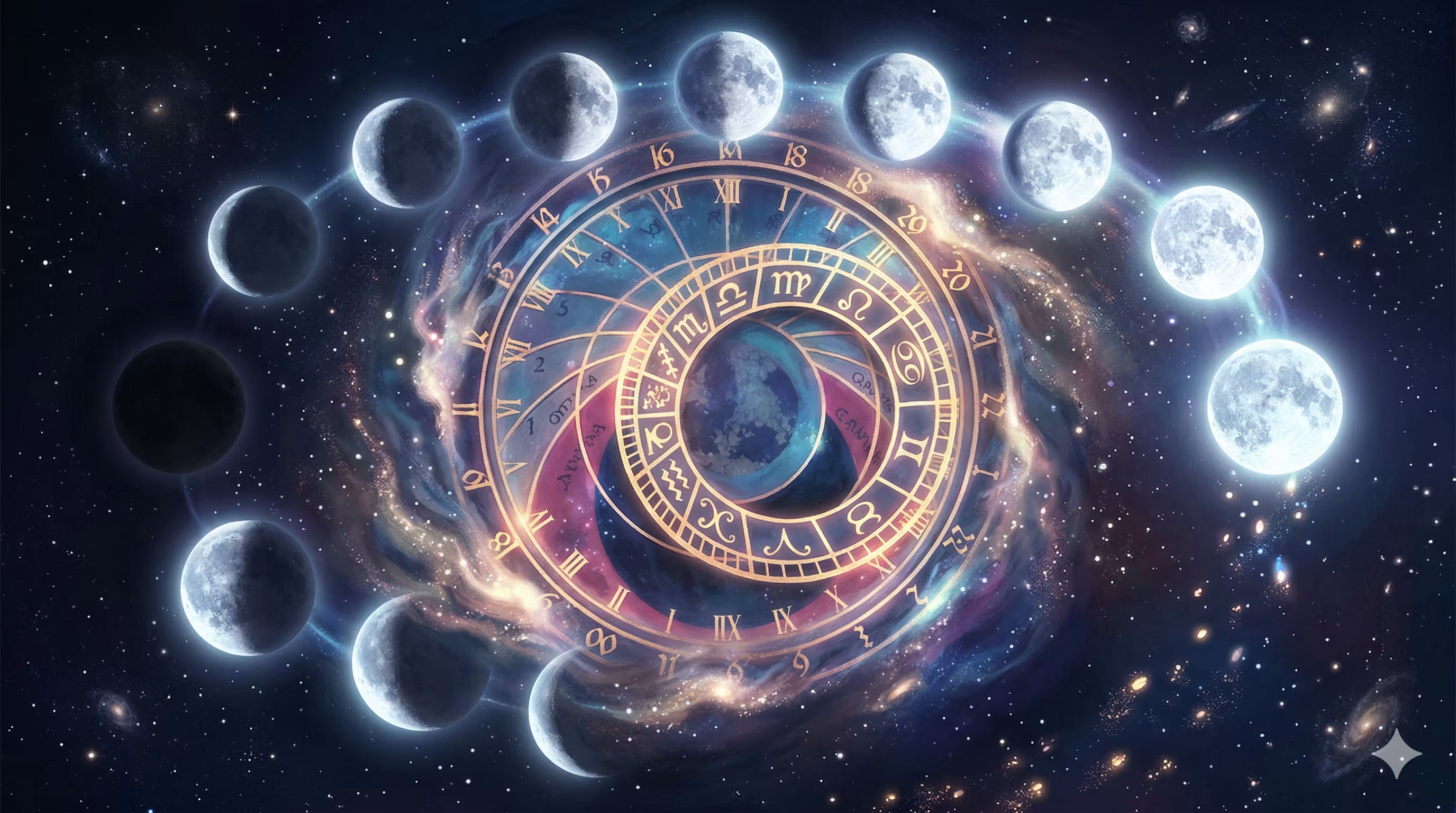
In the Vaidika vision, time is not a mechanical sequence of hours and minutes it is a living, breathing presence, infused with meaning and rhythm. The Pañcāṅga, often translated simply as the “Hindu calendar,” is in truth a subtle map of this living time (kāla), revealing not just when something happens, but the qualitative nature of each moment. The word itselfpañca (five) and aṅga (limbs)points to its structure: five components that together describe the texture of time.
These five are tithi (lunar day), vāra (weekday), nakṣatra (lunar constellation), yoga, and karaṇa. Each is not merely astronomical, but symbolic, reflecting different layers of experience. Just as the human being has multiple sheaths (kośas), time too unfolds in layersphysical, psychological, and spiritual.
Among these, tithi holds particular depth. It reflects the angular relationship between Sūrya and Candra, and thus directly influences the manas (mind). Traditional classifications such as Nanda, Bhadrā, Jaya, Rikta, and Pūrṇatithis reveal the inherent quality of each lunar day. For instance, Riktatithi (like Caturthī, Navamī, Caturdaśī) is considered “empty,” not in a negative sense, but as a space suited for release, austerity, and letting go. In contrast, Pūrṇatithi (like Pañcadaśī) carries fullness and completion. Such distinctions subtly guide actionnot as rigid rules, but as attunements to rhythm.
The nakṣatra, another limb, connects us to the stellar field. Each nakṣatra carries its own guṇa and tattva, shaping the emotional and psychological tone of the day. For example, asāttvikanakṣatra may support clarity and contemplation, while a rājasa one may energize activity and ambition. In this way, the Pañcāṅga becomes a bridge between the cosmos and the inner landscape.
A traditional expression beautifully captures this interconnectedness:
“kālaḥkalayatibhūtānisarvāṇiitisaḥsmṛtaḥ”
“Time (kāla) is that which shapes and transforms all beings.”
Thus, to read the Pañcāṅga is not merely to check a date, but to enter into a relationship with time itself.
The remaining limbsvāra, yoga, and karaṇaadd further nuance. Vāra links each day to a graha, subtly coloring its energy. Yoga reflects a specific angular relationship between the luminaries, often indicating harmony or tension in the flow of events. Karaṇa, being half a tithi, points to the immediate practicality of actionwhether a moment is steady, dynamic, or transitional.
From an adhyātmikadṛṣṭi, the Pañcāṅga serves as a tool of alignment. When one begins to observe it regularly, a quiet sensitivity develops. One notices how certain days naturally invite introspection, while others support outward engagement. This awareness refines viveka (discernment), allowing action to arise in harmony with the larger order (ṛta).
Another simple yet profound line reflects this wisdom:
“ṛtekālaṁnasiddhyantisarvakāryāṇidehinām”
“Without alignment with time, no actions of embodied beings find true success.”
In modern life, where time is often treated as something to be managed or conquered, the Pañcāṅga offers a gentler दृष्टिa way of listening. It reminds us that not every moment is meant for the same kind of action, and that wisdom lies not only in effort, but in timing.
Ultimately, the Pañcāṅga is not about superstition or rigid scheduling. It is about relationshipbetween the individual and the cosmos, between intention and timing, between effort and grace. When approached with understanding, it transforms time from a pressure into a companion, guiding one toward a life that is not only productive, but harmonious and deeply attuned.